Monday, June 27, 2011

Snom Goes End to End


Snom is well known as a provider of IP phones. But if you think this company is just a desktop phone outfit, think again. Snom has evolved to deliver a broad set of IP communications solutions and applications.

The company formally set out in this direction with the introduction of IP PBX (News - Alert) software back in October of 2010. The IP PBX solution, called snom ONE, provides customers with a software-based IP telephony system that supports all the functionality of snom IP phones.

"In the past we’ve experienced problems with customers missing out on some of the key features delivered by our phones, due to the installed IP PBX systems," says Jonathan Greenwood, snom ONE product manager and managing director of snom UK Ltd. "With snom ONE, our customers can continue to install and run our VoIP phones on every SIP-based PBX, whilst having additional access to a series of easy to install telephony systems, perfectly tailored to our phones. This is our response to the many compelling requests by resellers and users in recent years.”

Mike Storella (News - Alert), snom’s chief operating officer, says that the snom PBXs can emulate key system operation in all snom phones, adding that not all IP PBXs support shared lines. He says the end-to-end snom solution also can support more busy lamp interconnection, and, over time, snom will develop some cool new features designed to leverage applications using both its IP PBXs and phones.

The snom ONE solution is available in three versions, all of which offer the same features. The product called snom ONE free is downloadable free of charge for up to 10 extensions. There also are two resale systems. The snom ONE yellow version addresses applications involving up to 20 extensions. Meanwhile, snom ONE blue supports an unlimited number of extensions and multi-tenant applications involving up to five companies.

Storella says that there have been thousands of downloads worldwide for the free version. Meanwhile, hundreds of the PBX software packages – which are available in 60 countries via 200 distributors – have been sold.

“So we’ve had a lot of success,” says Storella. “Clearly our distributors took up the software very rapidly.”

Now snom is busy educating its distribution channel on a new hardware-based PBX solution the company unveiled this spring.

Snom ONE plus is a new hardware-based version of the company’s snom ONE IP PBX. It’s targeted at organizations with five to 150 extensions. And snom says it is one of the most scalable and easy to install systems on the market.

The snom ONE plus provides VARs with a plug-and-play hardware appliance for business IP telephony that is pre-installed and configured with snom ONE IP PBX software. That enables easy deployment with snom business IP desktop phones and endpoints, including the snom 3xx series, snom 8xx series, snom m9 DECT (News - Alert)phones, and snom MeetingPoint conference phone.

Snom says that this solution provides small and medium size businesses all the advanced IP PBX functionality they need today and positions them with all the features they’ll require well into the future. That includes a centralized address book, auto attendants, hunt groups, hot desking, shared line emulation and CRM integration. It also entails various advanced presence and monitoring features, such as remote extension monitoring, agent groups, remote worker support and cell phone twinning.

This kind of scale and flexibility at this price point “is unheard of in the industry and ensures that growing businesses won’t have to replace their entire telephony system if they grow beyond a certain point or need to change connectivity platforms,” says Greenwood.

Storella adds that the snom One plus offers VARs a total solution for the easy and efficient deployment of IP communications at a price point that provides value for their SMB customers.

“By offering a fully integrated system including hardware, full-featured IP PBX software and a full suite of IP phones and endpoints, VARs can accelerate installation and focus on building their own businesses,” he says.

This nice little 2U device can be wall mounted or installed in a rack, Storella adds, and it’s great for VARs and installers that don’t want to make choices relative to hardware. And it’s tested, full featured and is priced to include the full array of features, he notes.

The snom ONE plus became available in North America as of March of 2011 through snom’s distributors and value added resellers, and comes with a three-year hardware warranty. It actually comes in two versions. The snom ONE plus yellow was designed for installations with up to 20 extensions. The snom ONE plus blue is for customers that need to support up to 150 extensions.

These solid-state appliances also support SIP trunk or multi-functional PSTN connectivity, allowing for multiple termination options, including analog, PRI, BRI, T1 and E1, expandable from 4 Port FXO to 16 Ports, from 2 Ports BRI to 6 BRI, or from ISDN to T1/E1.

Pricing varies depending on configuration, but it ranges from about $2,100 (for the lowest-cost hardware-based yellow solution) to less than $4,000 (for a high-end blue solution).

“The price is very attractive,” says Storella, adding that’s between 20 and 40 percent less expensive than what the competition delivers. “It’s under $4,000 – and that’s list.”

Of course, these new hardware-based IP PBXs are just part of what snom offers.

“It’s a tool in our bag to present to customers that are doing IP communications,” says Storella.

Meanwhile, snom continues to add to its intelligent endpoints and devices, with which the company is on its fourth generation.

Earlier this year announced today that its executive business phone, the snom 821, has been tested and approved byMicrosoft Corp.

“We have always been keenly focused on interoperability in all our products, so achieving qualification of the snom 821 with Microsoft Office Communications Server 2007 R2 marks the next step of closer interoperability with Microsoft environments, adding new functionality to the snom OCS edition firmware,” says Michael Knieling (News - Alert), executive vice president of marketing and sales, snom technology. “The snom 821 is our most popular executive-class phone and with a full color display and HD audio codecs, it is a great phone to take advantage of all the benefits of a Microsoft OCS 2007 R2 environment.”

The snom 821 has a high-resolution TFT color display. It can display presence, supports speed dialing of client contacts, and hosts a gigabit Ethernet switch. Capable of supporting up to 12 accounts, snom says this the only phone in the market that can concurrently operate in a mixed environment of Microsoft OCS R2 and SIP on a single phone, offering maximum flexibility to the end customer.

“This qualification with Microsoft as part of its Compatible Device Program is a great reference point for resellers and distributors who need an advanced, business-class desktop phone that is tested with Microsoft OCS 2007 R2,” says Storella.


Sources : http://www.tmcnet.com


History of the Internet

Starting from the time of the competition between America and Soviet (USSR). Began when the Soviets launched Sputnik, America then create the Advanced Research Projects Agency (ARPA, later known as the Defense Advanced Research Projects Agency, or DARPA) in February 1958. ARPA then make Information Processing Technology Office (IPTO) to further address research Semi Automatic Ground Environment (SAGE) program. Where the project aims to combine the radar system throughout the United States for the first time. IPTO chairman at the time ie. J. C. R.Licklider said that this networking will change human history.

Licklider recruited Lawrence Roberts to head the project which aims to implement a network, Lawrence Roberts recommended packet switching (compared to circuit switching) to make the network more resistant to interference. The point of the first network that is established and functioning is at UCLA on October 29, 1969 which was then called ARPANET, one mother / elder network from the Internet.

From here the history goes where, the British Post Office, Western Union International and Tymnet collaborated to form an international network based packet switched networks, known as the International Packet Switched Service (IPSS), in 1978. This network grew from Europe, U.S. to Canada, Hong Kong and Australia in 1981.

We jump a bit:

Network wide area network TCP / IP was first operated on 1 January 1983, when the National Science Foundation (NSF) United States create a backbone (spine) which later became the university's network NSFNet. This date was then by some people mentioned as date of birth of the Internet.

Then in 1985, many emerging networks and network operators who aim to profit or business. These operators are then joined the NSFNet. Until now, so that eventually the entire TCP / IP networks around the world connect with each other and we call this the world's Internet networks.

Robot soccer? true robot can play ball?


Blistener probably never heard of a soccer elephant. There is also a soccer ball of fire.But, perhaps blistener've never heard of soccer robot right? This is really a soccer gameplayed by robots.
Recently at Arena Sports, State University of Yogyakarta, Sleman, Yogyakarta in the titleevent the robot contest. The presence of the audience like he was watching a football match.
The audience was actually watching a football match played by the robot work of the students as Central Java and Yogyakarta
.

Do not imagine that the robot can play ball with nimble like a human. The robot is still moving slow-paced. This condition on the one hand makes the audience amused laugh,but also pretty annoyed that the robot's movements are so slow.
Robot contest, followed by at least 30 campuses is not only held a soccer match, butalso other skills such as stringing decorations and blow the fire. Not all robots can carry out their duties properly.
Robot champions in this event will represent the national level robotics contest next month.

Sources: Liputan6.com

2011 YAMAHA FZ8 FIRST LOOK


Yamaha’s sporting line of motorcycles grows with the introduction of the new 2011 Yamaha FZ8 street bike; a streetfighter-style machine that offers European styling and a conventional riding position with a sporting engine and chassis character. At an MSRP of $8490, it slots in directly between the FZ1 and FZ6R, Yamaha’s two current streetfighters.
Beneath the 4.5-gallon fuel tank lies a liquid-cooled and fuel-injected 779cc Inline-Four. The engine uses the same cases as the pre-crossplane crankshaft-equipped Yamaha YZF-R1, but gets an entirely new crankshaft and top end. The engine operates with a conventional engine firing order, unlike the current R1, while the powerband has been specifically tuned for the rigors of urban riding with more low-to-mid rpm torque output.
Each piston slides within a cylinder that features a 68.0 x 53.6mm bore and stroke. Fuel is squeezed at a 12.0:1 ratio and the bike uses a 16-valve cylinder head, actuated by dual overhead camshafts. Power is transferred back to the rear tire through a manual cable-actuated clutch, 6-speed transmission and chain final drive.
The engine is suspended within a black cast aluminum frame mated to a swingarm of the same composition, with its handling emphasis put on moderate-speed agility. Front-to-rear weight bias is claimed to be 51/49; suspension includes a 43mm inverted fork and a spring preload-adjustable shock absorber.
The FZ8 rolls on 17-inch cast aluminum wheels that feature a 5-spoke design. The wheels are paired to Bridgestone Battlax BT-021 sport touring tire in sizes 120/70 front and 180/55 rear. Braking components consist of a pair of 310mm discs clamped by 4-piston calipers up front and 267mm rear disc with a double-piston caliper out back.

The cockpit of the FZ8 is similar to the FZ1 and is designed to be a balance between sport and comfort. It makes use of a standard, upright aluminum handlebar that is said to be positioned 4mm forward as compared to its elder sibling. The footpegs have also been positioned down 10mm and back 15mm. Seat height is measured at 32.1 inches off the ground and with a full load of fuel the bike is claimed to weigh 480 pounds.
Visually all of the bikes major components are painted black and the engine is hung out in the open without any fairings or plastic body panels covering it. The FZ8 is available in one color, Raven, and will be available in dealers December of this year.

Engine: 779cc liquid-cooled Inline-Four, 16-valve
Bore x Stroke: 68.0 x 53.6mm
Compression Ratio: 12.0:1
Fuel Delivery: Fuel-injection
Clutch: Wet multi-plate, cable actuation
Transmission: 6-Speed
Front Suspension: Soqi 43mm inverted fork, 5.1 in. travel
Rear Suspension: Soqi shock absorber with adjustable spring preload; 5.1 in. travel
Front Brake: 310mm disc, 4-piston caliper
Rear Brake: 267mm disc, 2-piston caliper
Front Tire: Bridgestone 120/70-17
Rear Tire: Bridgestone 180/55-17
Curb Weight: 470 lbs.
Wheelbase: 57.5 in. Length: 84.3 in. Width: 30.3 in.
Rake / Trail: 25 deg. / 4.5 in.
Seat Height: 32.1 in.
Fuel Capacity: 4.5 gal.
MSRP: $8490, Raven

Article Source: http://www.motorcycle-usa.com

Friday, June 24, 2011

Gaming Tips


Three Things to Consider When Buying a Gaming Computer Motherboard
Being the computer component that connects all other vital PC computer hardware together, the PC motherboard is among the most essential parts of a computer system. The motherboard becomes doubly more important in a gaming rig.

Buying a Gaming Computer: Four Things to Consider
If you are an avid fan of computer games, you will need a powerful computer to run all the intensive applications of modern 3D games. You will need to place speed and performance on top of cost and portability when buying a gaming PC. These high-performance machines require high-end components which come at a hefty price tag. You will not necessarily have to break the bank but be ready to shell out some extra bucks!

Gaming PC: Three Must-Have Components
If you are looking to build or buy a gaming PC, make sure you get the right components. Compared to an everyday home PC, gaming PCs have to have higher-end hardware to run graphics-intensive tasks. If you do not equip your gaming PC with good hardware, your games will run poorly — the frame rate will suffer making for choppy games and performance lags. In addition, you will not be able to experience your games fully since the graphics options you can enable will be limited.


Source : http://www.computerknowledgeforyou.com

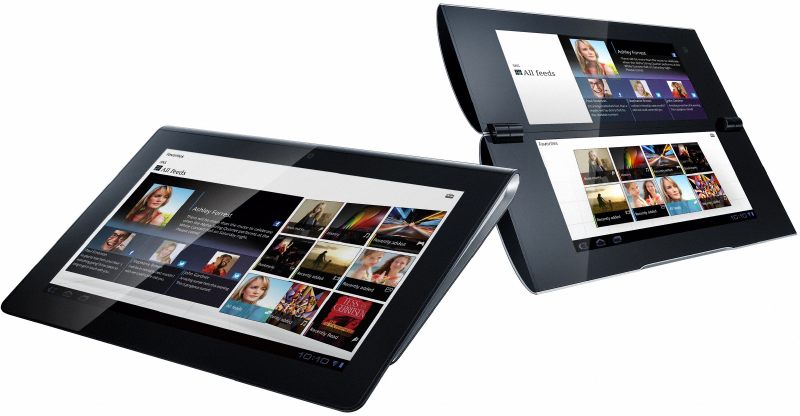
Sony preparing to enter the tablet PC at the End of the year


After waiting long enough, Sony is finally ready to enter the tablet PC market at the end of the year through two tablet models based on Google's Android operating systemversion. Sony on Tuesday said the tablet with the name of the development of S1 andS2 will dirlis in the fall. Both tablets will use the Android operating system version 3.0, called Honeycomb, and can connect to WiFi hotspots and cellular networks.

Sony installing infrared transmitters into the S1, so that could be used as a controlgadgets at home such as televisions and Blu-Ray disc player. While the S2 dual screens can be used to play games. The top screen to display the game while the bottom screen can be manipulated into touchscreen control functions.

Twitter Delicious Facebook Digg Stumbleupon Favorites More

 
Design by Free WordPress Themes | Bloggerized by Lasantha - Premium Blogger Themes | JCpenney Printable Coupons